

As-built surveys are often treated like a checkbox—and there’s a reason for that.
Many teams have been burned before.
Incomplete information. Errors and omissions. Drawings that look fine on screen but fall apart when they meet construction. Over time, this erodes trust. When trust is low, expectations drop. And when expectations drop, quality stops mattering.
If you don’t believe the drawings can be trusted, you won’t use them to plan at a meaningful level. You’ll ask only high-level questions. You’ll avoid tight tolerances. You’ll assume problems will surface later—and deal with them then.
That mindset becomes self-fulfilling.
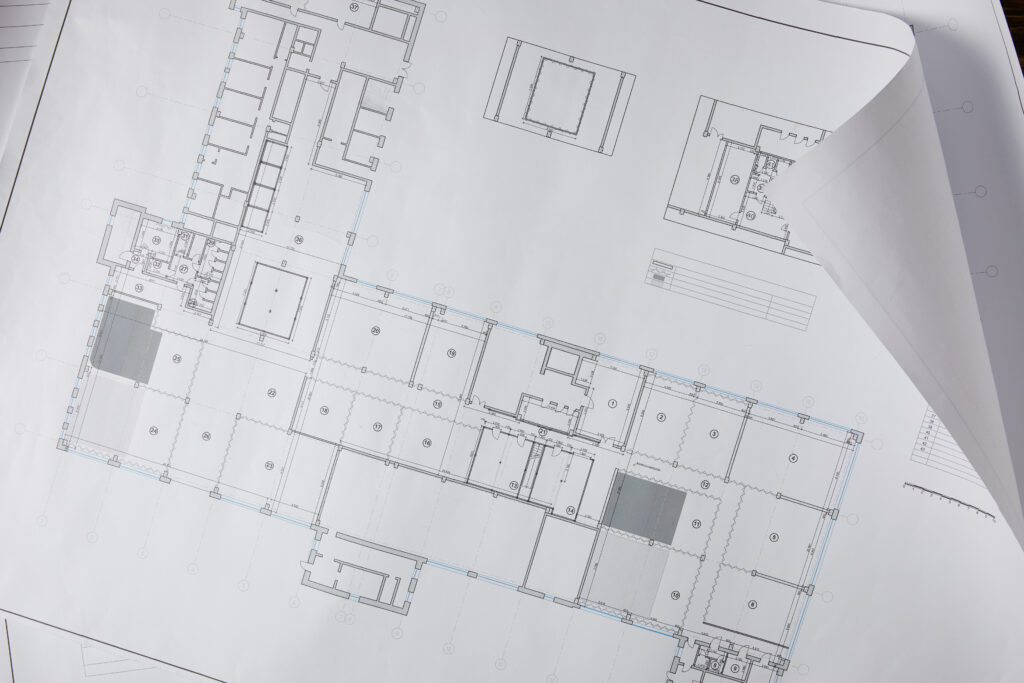
The real value of an as-built survey is not that it is “mostly right.” The value comes when it is deeply trusted at the detail level. That level of trust unlocks better planning, earlier decisions, and materially better downstream outcomes in construction and installation.
The consequences of weak surveys tend to hide. If you’re lucky, they show up early in design—when you realize you don’t have enough information to make a decision. That hurts, but it’s manageable.
The dangerous scenarios are the ones that stay hidden until construction.
A wall drawn at 8′-0″ that’s actually 7′-11″. A ceiling height off by an inch. A column assumed to be concrete that turns out to be fiberglass-wrapped steel. These differences are invisible in design, but painfully obvious when cabinets arrive, fixtures don’t fit, and crews are standing idle.
The longer an issue hides, the more expensive it becomes.
More money. More time. More stress.
Accuracy alone isn’t enough. A scan can be accurate and still be unhelpful. What matters is whether the information is captured, organized, and presented with decision-making in mind.
A survey should not be a pile of data. It should be preparation.