Building Information Modeling (BIM) has spent years surrounded by hype. Today, it’s finally settling into its proper role.
At its best, building information modeling (BIM) is not about adding more detail—it’s about adding usable intelligence to the planning process. It becomes the working model of a store, not just a representation of it.
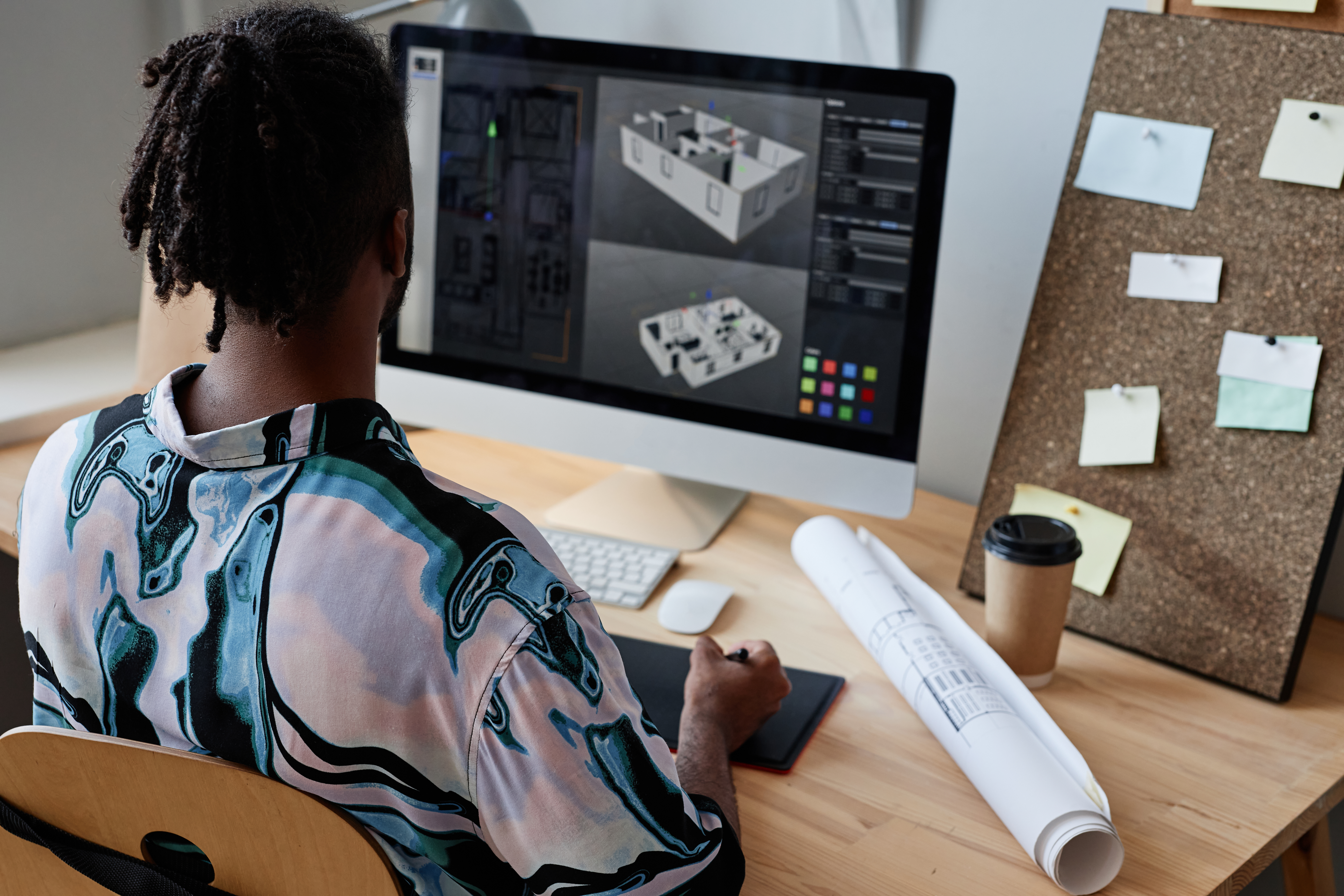
For some organizations, a CAD drawing with well-defined blocks is enough. If a rectangle labeled “gondola” provides all the information needed to plan, procure, and operate, then that’s the right tool.
But for teams looking to go further, BIM modeling changes how decisions get made.
With the right level of BIM modeling, teams can move beyond static layouts and start understanding how a space will actually perform. Not just where things go—but how they interact.
That includes:
- Visualizing sightlines and customer experience in context
- Coordinating signage, fixtures, and departments in three dimensions
- Producing precise quantity takeoffs for procurement
- Reducing waste by ordering exactly what’s required
This is where building information modeling starts to separate itself from traditional drafting. It allows teams to test decisions virtually—where adjustments are fast and inexpensive—rather than discovering conflicts on site.
But the value of BIM modeling isn’t automatic. It depends on alignment.
Overbuilt models filled with unused detail create drag. Underbuilt models limit insight. The effectiveness of building information modeling (BIM) comes down to using the right level of intelligence for how the organization actually operates.
The question isn’t “Should we use BIM?”
It’s “What decisions do we want BIM to inform?”
When that answer is clear, BIM modeling becomes a tool for clarity, not complexity.
Its value increases even further when it extends beyond the initial project. When building information modeling is maintained and referenced over time, it becomes a living source of truth—supporting future renovations, refreshes, and operational decisions.
That’s when BIM shifts from a project deliverable to a long-term asset.
Used intentionally, BIM modeling reduces surprises, improves coordination, and gives teams the ability to solve problems before they become expensive.
BIM isn’t about drawing more.
It’s about knowing more—before it matters most.