
Stephen Hart
CEO & Visionary
Most retail projects don’t fail because people lack talent.
They struggle because the work is fragmented.
One team documents existing conditions. Another plans the space. A third installs what arrives on site. Each group does its job—often competently—but the learning between steps is slow, inconsistent, or lost entirely. Problems discovered downstream don’t reliably improve upstream decisions. Change orders become normal. Stress becomes accepted.
At DedON, we designed our business to solve that exact problem.
At the center of everything we do is store planning—bringing a brand to life in a physical space. To do that well, three things must work together as a system:
Understand what exists.
Plan what comes next.
Deliver what was intended.
Understand What Exists
Great planning starts with truth.
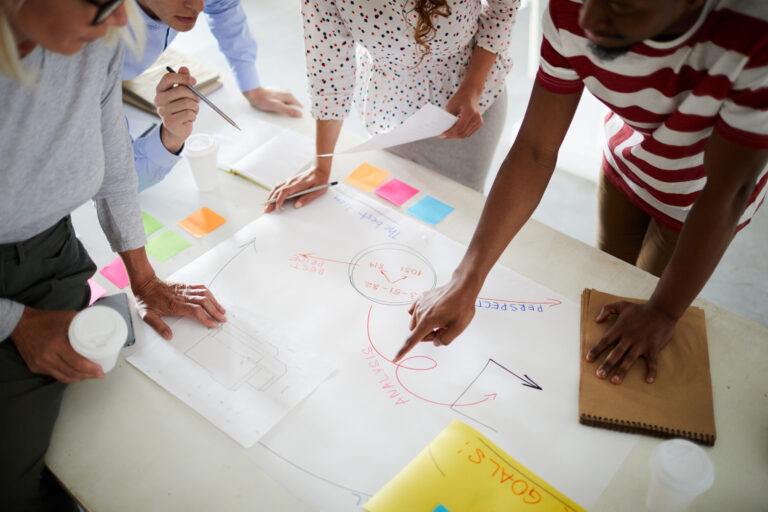
Before decisions can be made, teams need a clear, reliable understanding of real-world conditions: dimensions, constraints, clearances, services, adjacencies, and opportunities. That’s why site surveys aren’t a standalone service for us—they’re the foundation of everything that follows.
When you truly understand what exists, planning becomes confident instead of cautious. You know what can stay, what must change, and where precision matters most. Without that clarity, planning becomes defensive and shallow by necessity.
Plan What Comes Next
Planning is where intent takes shape.
This is where brands decide how they want to show up in a space—how departments flow, how fixtures support product, how the customer experience feels. Because planning sits between upstream reality and downstream execution, it must be informed by both.
That’s why we say we’re store planners first.
We don’t just plan in theory. Our planning is informed by thousands of real stores, real installations, and real constraints. We plan knowing what will be built, how it will be assembled, and where things tend to break down if they’re not thought through early.
When planning is done with this context, teams can move faster, decide earlier, and commit with confidence.
Deliver What Was Intended
Installation is where plans meet reality.
This is where designs are validated, assumptions are tested, and brand intent either comes to life—or doesn’t. Being present downstream gives us something most planners never get: immediate feedback.
When something is difficult to install, when parts are missing, when clearances don’t work, or when a process causes friction on site, we don’t just fix it and move on. That learning feeds directly back into planning and surveying. Checklists evolve. Details improve. The next project gets easier.
This is the improvement loop most organizations never get.
Why the System Matters
Retailers are built to run retail. Their internal teams are often cost centers, focused on keeping work moving—not on designing systems that continuously improve execution.
We are built for this work.
By operating across brands, geographies, and project types—and by connecting upstream truth with downstream reality—we create a low-friction system that allows our clients’ teams to focus on exceptions while the majority of work flows as intended.
The result isn’t perfection.
It’s predictability.
Calmer projects. Fewer surprises. Less waste. More stores opening the way they were meant to.
That’s what happens when understanding, planning, and execution stop being separate services—and start working as one system.